
As we navigate through 2026, the Australian real estate market continues to demonstrate remarkable resilience and segmented growth. Following the aggressive interest rate cycles of the early 2020s, the market has stabilized, presenting distinct, data-backed opportunities for domestic and international investors. According to the latest data from the Australian Bureau of Statistics (ABS) and real estate analytics from CoreLogic Australia, population growth and severe housing undersupply remain the primary drivers of capital growth [1].
However, a “one-size-fits-all” approach to Australian property no longer applies. The landscape is fragmented. Investors must choose between high-yield resource states, infrastructure-driven Olympic cities, and recovering international education hubs. Based on the CoreLogic Hedonic Home Value Index and Domain Group Research, this comprehensive guide outlines the top five cities and corresponding suburbs that offer the best property investment potential in 2026.
1. Brisbane & South East Queensland: The 2032 Olympic Boom

Brisbane is undeniably the crown jewel of Australian property investment in 2026. With the 2032 Summer Olympics now just six years away, South East Queensland is undergoing an unprecedented infrastructure transformation. History dictates that host cities experience a massive surge in property values in the decade leading up to the games, driven by government spending, job creation, and international focus [2].
The Investment Thesis
The Queensland government is injecting billions into projects like the Cross River Rail, Brisbane Metro, and the complete redevelopment of the Gabba precinct. This infrastructure makes previously disconnected suburbs highly accessible, driving up land values. Furthermore, Brisbane’s relative affordability compared to Sydney continues to attract record levels of interstate migration.
- Woolloongabba & East Brisbane: The epicenter of the Olympic infrastructure. While prices have risen, the completion of the Cross River Rail in 2026/2027 will trigger a secondary growth wave for apartments and townhouses.
- Hamilton & Northshore: The designated site for the Olympic Athlete’s Village. This area is seeing massive urban renewal, making it ideal for long-term capital growth.
- Moreton Bay Region (e.g., Petrie, Redcliffe): Offering higher rental yields and benefiting from the newly established university campus and upgraded transport links to the Brisbane CBD.
2. Perth, Western Australia: The High-Yield Powerhouse

If Brisbane is the growth capital, Perth is the undisputed king of rental yields. Throughout the post-pandemic recovery phase, Perth recorded the strongest property price growth in the nation, effectively catching up after years of stagnation [3]. Even in 2026, it remains one of the most affordable capital cities in Australia with the tightest vacancy rates.
The Investment Thesis
Perth’s economy is heavily tied to the resources and mining sector, which remains robust. High wages combined with affordable entry prices mean that investors can easily find properties that are positively geared (where the rental income exceeds the mortgage and holding costs). According to Domain Group data, Perth consistently offers gross rental yields hovering around 5% to 6%, significantly outpacing Sydney and Melbourne [4].
- Joondalup: A major northern hub with a university, hospital, and retail center. It offers strong, consistent tenant demand from students and healthcare workers.
- Armadale & Gosnells: High-yield, affordable corridors that attract strong interstate investor interest due to low entry prices (often under $550,000 AUD).
- Victoria Park: An inner-city suburb offering a gentrifying lifestyle appeal, perfect for attracting young professionals willing to pay premium rent.
3. Sydney (CBD & Eastern Suburbs): The Blue-Chip Safe Haven

Sydney remains the most expensive and prestigious real estate market in Australia. While it may not offer the rapid percentage growth of Brisbane or the high yields of Perth, Sydney is the ultimate “blue-chip” safe haven. For high-net-worth foreign investors looking for capital preservation and long-term, low-risk growth, Sydney is the primary target.
The Investment Thesis
Sydney’s geographical constraints (bound by the ocean and mountains) mean that land in premium areas is finite. The CoreLogic Hedonic Home Value Index repeatedly shows that while Sydney markets correct during interest rate hikes, their recovery is historically the fastest and most aggressive [3]. The focus here is not on positive cash flow (yields are typically a low 2.5% to 3%), but on compounding capital growth over a 10-to-20-year horizon.
- Sydney CBD & Haymarket: With the full return of corporate workers and international business in 2026, premium, well-managed CBD apartments offer zero-vacancy security.
- Randwick & Kensington: Located in the prestigious Eastern Suburbs, these areas are anchored by the University of New South Wales (UNSW) and major hospitals, ensuring constant demand from high-income medical professionals and international students.
- The Inner West (e.g., Marrickville): Benefiting from the new Sydney Metro expansions, connecting these lifestyle-rich suburbs directly to the CBD in minutes.
4. Melbourne: The Resurgence of the International Student Hub
 1].
1].
The Investment Thesis
Because Melbourne’s property prices remained relatively suppressed while Brisbane and Perth surged, it currently represents significant “value for money.” The undersupply of new apartment completions in the inner city, combined with hundreds of thousands of returning students, has driven rental prices to record highs, creating a highly lucrative environment for apartment investors.
- Carlton & Parkville: The undisputed education epicenters, housing the University of Melbourne and RMIT. Purpose-built student accommodation and modern apartments here are essentially recession-proof.
- Footscray: An inner-west suburb undergoing massive gentrification. The new Footscray Hospital project (completed in 2025/2026) has brought thousands of high-paying medical jobs to the area.
- Southbank & Docklands: After years of oversupply, the surplus of apartments has been completely absorbed by the returning population, leading to rapid rental yield expansion.
5. The Gold Coast: The Lifestyle and Expat Magnet
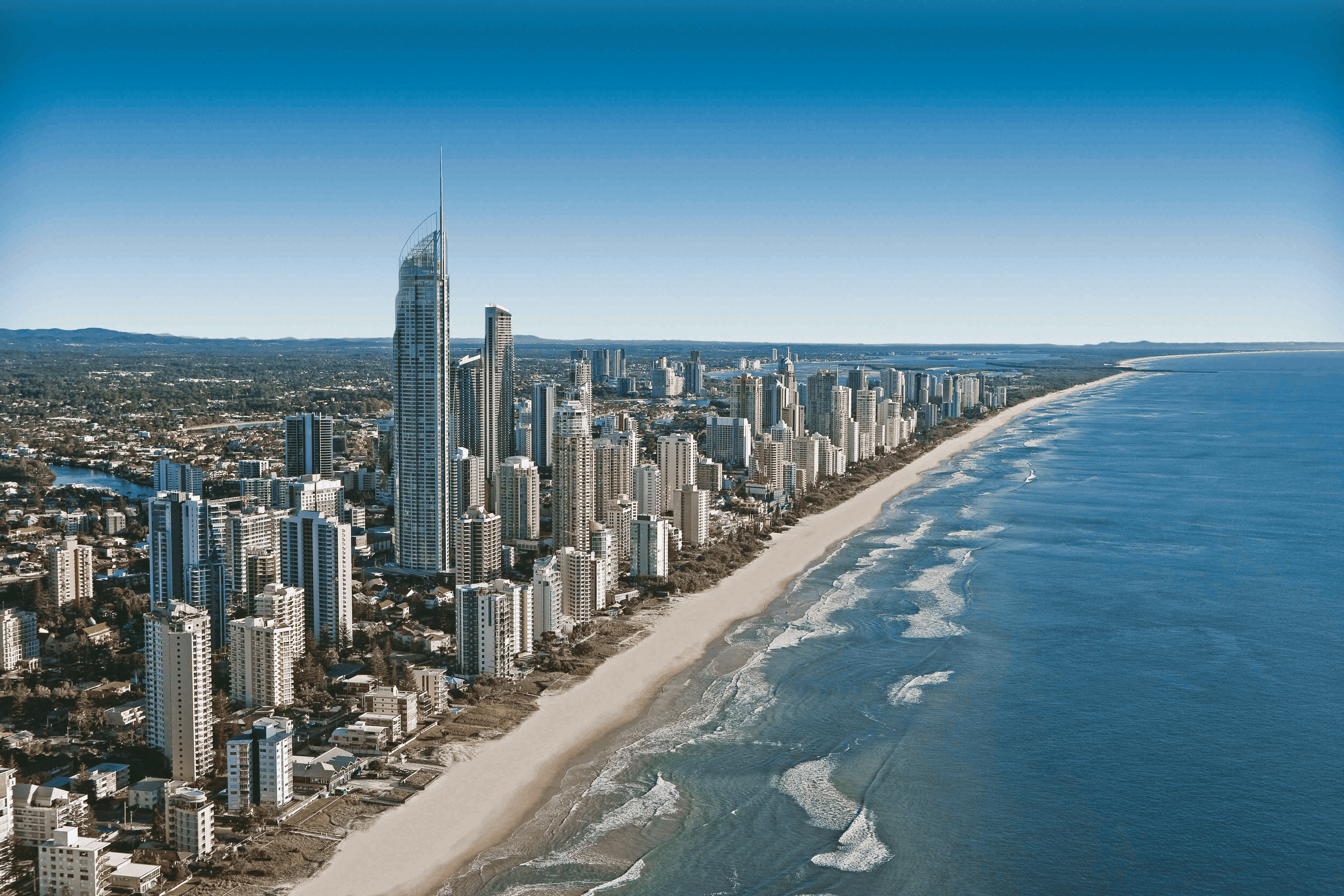
The Gold Coast is no longer just a holiday destination; it has evolved into a major Australian metropolis. The legacy of the remote-work revolution has permanently altered the demographics here. High-income earners from Sydney and Melbourne, alongside wealthy expatriates returning to Australia, are choosing the Gold Coast for its unparalleled lifestyle, driving the luxury property market to new heights.
The Investment Thesis
The Gold Coast suffers from a severe geographic constraint: it is wedged between the Pacific Ocean and the hinterland mountains. This lack of developable land, combined with relentless interstate migration, has created a critical housing shortage. According to Domain Group, luxury apartments and waterfront homes here continue to see capital growth that rivals capital cities [4]. Furthermore, the upcoming 2032 Olympics will see several events hosted on the Gold Coast, further boosting its infrastructure.
- Broadbeach & Surfers Paradise: The focus here is on newly built, high-end, owner-occupier style apartments rather than older holiday lets. Premium finishes attract wealthy down-sizers and expats.
- Southport: The designated Central Business District of the Gold Coast. It offers slightly more affordable entry points for investors and is heavily supported by the health and education precincts (Griffith University and Gold Coast University Hospital).
- Burleigh Heads: The most highly sought-after lifestyle suburb on the coast. With the light rail extension now reaching Burleigh, property values here are expected to command long-term premiums.
Frequently Asked Questions (FAQs)
Which city is best for a beginner investor in 2026?
For beginner investors with a lower budget, Perth is currently the most accessible. You can secure a house with land for the price of a small apartment in Sydney. Furthermore, the high rental yields in Perth mean the property will likely pay for its own mortgage, reducing your out-of-pocket holding costs.
As a foreign investor, can I buy an established house in these top suburbs?
Generally, no. Under strict Foreign Investment Review Board (FIRB) regulations, non-resident foreign investors are restricted to buying brand-new dwellings or vacant land to build on. If you are looking at these suburbs, you will need to focus on off-the-plan apartments, new townhouse developments, or house-and-land packages in the outer rings.
Is the “Olympic Effect” in Brisbane real?
Yes. Historical data from previous Olympic host cities (like Sydney in 2000 and London in 2012) shows a clear correlation between the massive infrastructure spending required for the games and sustained, above-average property value growth in the host city during the 7 to 10 years prior to the event.
Why invest in Melbourne apartments if houses have better capital growth?
While detached houses generally offer better capital growth due to land value, Melbourne’s inner-city house prices are prohibitive for many investors. Due to a massive drop in construction approvals between 2022 and 2025, there is a severe undersupply of inner-city apartments in 2026. This scarcity, combined with the booming student population, has created a highly lucrative, high-yield environment specifically for Melbourne apartments.
Conclusion
The Australian property market in 2026 requires a highly targeted investment strategy. If you seek rapid capital growth fueled by unprecedented infrastructure spending, Brisbane is the logical choice. If your priority is positive cash flow and high rental returns, Perth stands unchallenged. For long-term, low-risk capital preservation, Sydney remains the premium blue-chip market. Melbourne offers a unique value-play driven by the resurgence of international education, while the Gold Coast provides a lucrative avenue into the booming lifestyle and luxury expatriate market.
Before making any investment, especially as a foreign national, ensure you consult with an Australian financial advisor and a conveyancing solicitor to navigate FIRB regulations, state taxes, and complex financial structuring.